For millions of people who contracted COVID-19, testing negative on a nasal swab did not mark the end of their illness. Months after the initial fever and acute infection resolved, many individuals find themselves still struggling with lingering shortness of breath on mild exertion, sudden chest heaviness, profound physical exhaustion, and a persistent dry cough. This prolonged, multi-system condition is clinically recognized as Long COVID or Post-Acute Sequelae of SARS-CoV-2 (PASC). Because the lungs are the primary target organ for coronavirus infection, respiratory symptoms dominate most Long COVID presentations. At Alliance Hospital BD on Khilji Road (Ring Road), our One Stop Respiratory Center provides dedicated post-COVID pulmonary evaluation, diagnostic testing, and structured rehabilitation in Shyamoli, caring for patients from Shyamoli and nearby Mohammadpur, Adabor, and Kallyanpur.
Long COVID is a genuine physiological condition, not psychological anxiety or imagined fatigue. The virus can leave behind low-grade alveolar inflammation, microscopic pulmonary vascular clotting, autonomic nerve dysregulation, and in some individuals, organizing pneumonia or post-viral pulmonary fibrosis. With thorough clinical assessment, targeted breathing therapies, and systematic pulmonary rehabilitation, patients can rebuild their respiratory endurance and reclaim their pre-illness quality of life.
According to international diagnostic criteria established by the World Health Organization on post-COVID conditions, Long COVID is defined as the continuation or emergence of symptoms 3 months after the initial SARS-CoV-2 infection, lasting for at least 2 months, and cannot be explained by an alternative medical diagnosis.
Remarkably, Long COVID does not only affect individuals who experienced severe infection requiring Intensive Care Unit (ICU) admission. Clinical registries indicate that a significant percentage of Long COVID sufferers initially experienced mild or moderate viral illness that was managed entirely at home.
The clinical hallmark of Long COVID is symptom unpredictability-patients frequently experience good days followed by sudden debilitating relapses after minor physical or mental effort (post-exertional malaise). Common manifestations include:
COVID-19 substantially elevates the risk of vascular thromboembolism (blood clots) for up to six months post-infection. Seek emergency medical care immediately at our 24-Hour Emergency Center if you experience:
Medical research has identified four primary mechanisms that explain why lungs continue to struggle long after viral clearance:
At Alliance Hospital, our respiratory team utilizes objective diagnostic testing to distinguish functional breathing issues from permanent structural lung damage:
Recovery Takes Time – Avoid “Pushing Through” Fatigue: One of the most common mistakes post-COVID patients make is attempting to force themselves back into intense exercise or long work hours too quickly. Pushing through severe fatigue often triggers a crash (post-exertional malaise) that sets recovery back by weeks. The golden rule of post-COVID recovery is pacing-gradually building activity within your energy envelope while listening to your body’s signals.
Managing Long COVID requires a multi-faceted clinical strategy tailored to each patient’s specific symptoms:
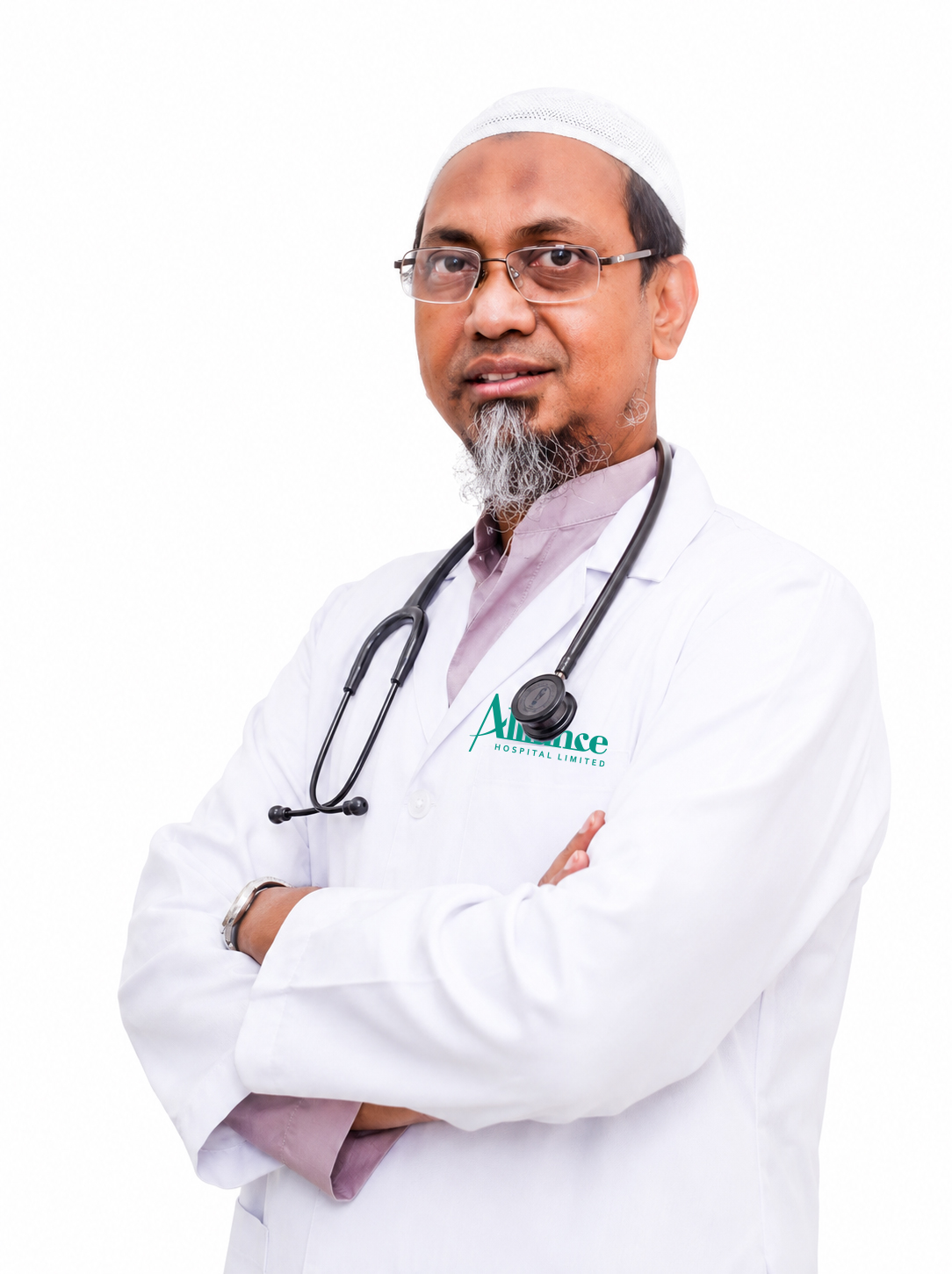
MBBS, MCPS, FCPS (Medicine), MD (Chest Diseases) – Professor, Respiratory Medicine
Eminent chest medicine specialist heading the One Stop Respiratory Center at Alliance Hospital. Expert in post-COVID pulmonary complications, pulmonary rehabilitation, interstitial lung diseases, and complex breathing disorders.
Alliance Hospital BD on Khilji Road (Ring Road) in Shyamoli offers coordinated, comprehensive care for patients navigating post-COVID recovery. Located within minutes of Mohammadpur, Adabor, and Kallyanpur, patients receive expert consultations, diagnostic imaging, and pulmonary rehabilitation without unnecessary cross-city travel. Explore our dedicated pulmonology service page to learn more.
Still feeling short of breath, exhausted, or troubled by a lingering cough after COVID-19? Rebuild your breathing confidence with specialized post-COVID care at Alliance Hospital in Shyamoli.
Recovery varies significantly between individuals. Many patients experience substantial improvement within 3 to 6 months with structured pacing and breathing exercises. For individuals with more extensive post-viral inflammation or scarring, full recovery may take 9 to 12 months under regular specialist follow-up.
In a small minority of severe cases-primarily those who suffered acute respiratory distress syndrome (ARDS) or required prolonged mechanical ventilation-some permanent fibrotic changes can occur. However, most post-COVID lung shadows represent slowly resolving inflammatory organization that improves steadily over time.
This is frequently due to post-viral autonomic dysfunction (POTS), where the nervous system fails to constrict blood vessels properly in the legs upon standing, causing blood to pool and forcing the heart to beat faster to maintain blood flow to the brain. Increasing fluids, salt intake (under medical supervision), and gentle exercise help restore autonomic balance.
No. Heavy weightlifting or intense cardiovascular workouts can trigger post-exertional malaise and set back recovery. Exercise should be reintroduced slowly and systematically under clinical guidance, beginning with restorative stretching and light walking before gradually increasing intensity.
A baseline clinical evaluation should include full spirometry (pulmonary function testing), a digital chest X-ray, resting and exertional pulse oximetry (six-minute walk test), and an ECG. A chest physician evaluates these results together to formulate a personalized rehabilitation plan.