Piles, or hemorrhoids, are one of the most common reasons patients in Shyamoli and nearby Mohammadpur end up consulting a colorectal surgeon — often after months of discomfort they’d rather not talk about. The good news is that piles are highly treatable, and most patients get lasting relief once they see the right specialist rather than relying on over-the-counter creams indefinitely. Alliance Hospital BD, located on Khilji Road (Ring Road) in Shyamoli, offers dedicated colorectal care through its Colorectal & Biofeedback Center, covering everything from diagnosis to advanced surgical treatment.
Piles are swollen blood vessels in and around the anus and lower rectum, often caused by prolonged straining, chronic constipation, pregnancy, sitting for long periods, or a low-fiber diet. They range from mild, internal swelling that isn’t visible to more advanced cases where tissue protrudes outside the anus. Left untreated, piles tend to progress rather than resolve, which is why symptoms are worth addressing early rather than managing indefinitely.
A note on rectal bleeding: While piles are the most common cause of rectal bleeding, the same symptom can occasionally point to something more serious, including colorectal conditions that need to be ruled out. Any new or persistent bleeding should be evaluated by a specialist rather than assumed to be piles.
Treatment depends on how advanced the piles are. Mild, early-stage piles often respond well to dietary changes, increased fiber and fluid intake, topical treatments, and correcting straining habits. Alliance Hospital’s colorectal team typically starts with a full evaluation to grade the piles before recommending a treatment path.
For grade I and II piles, minimally invasive procedures such as rubber band ligation or sclerotherapy are often effective, performed in a short outpatient visit with minimal downtime.
For more advanced or persistent piles (grade III and IV), surgical removal becomes the more reliable option. This includes conventional hemorrhoidectomy, and increasingly, laser hemorrhoid treatment or stapled hemorrhoidopexy — techniques that generally offer less post-operative pain and a faster return to normal activity compared to traditional surgery. The right approach depends on the piles’ grade, size, and the patient’s overall health, which is why a specialist evaluation matters more than a fixed rule.
Modern treatment has come a long way. Many patients delay seeking care because they associate piles surgery with significant pain and a long recovery. Current techniques, particularly laser and stapled procedures, have meaningfully reduced both compared to older surgical methods.
Patients searching for the best piles surgeon near Mohammadpur generally weigh a few practical factors: the surgeon’s specific colorectal training, experience with modern techniques like laser treatment, the hospital’s dedicated facilities, and how comfortably the treatment process is explained. “Best” here reflects how well a surgeon’s expertise and a hospital’s facilities match a patient’s specific case — not an official ranking.
Alliance Hospital’s Colorectal Surgery department is well positioned for patients from Mohammadpur, Adabor, and Kallyanpur given its location just off Ring Road in Shyamoli, offering the same specialist team and facilities without needing to travel further into the city.
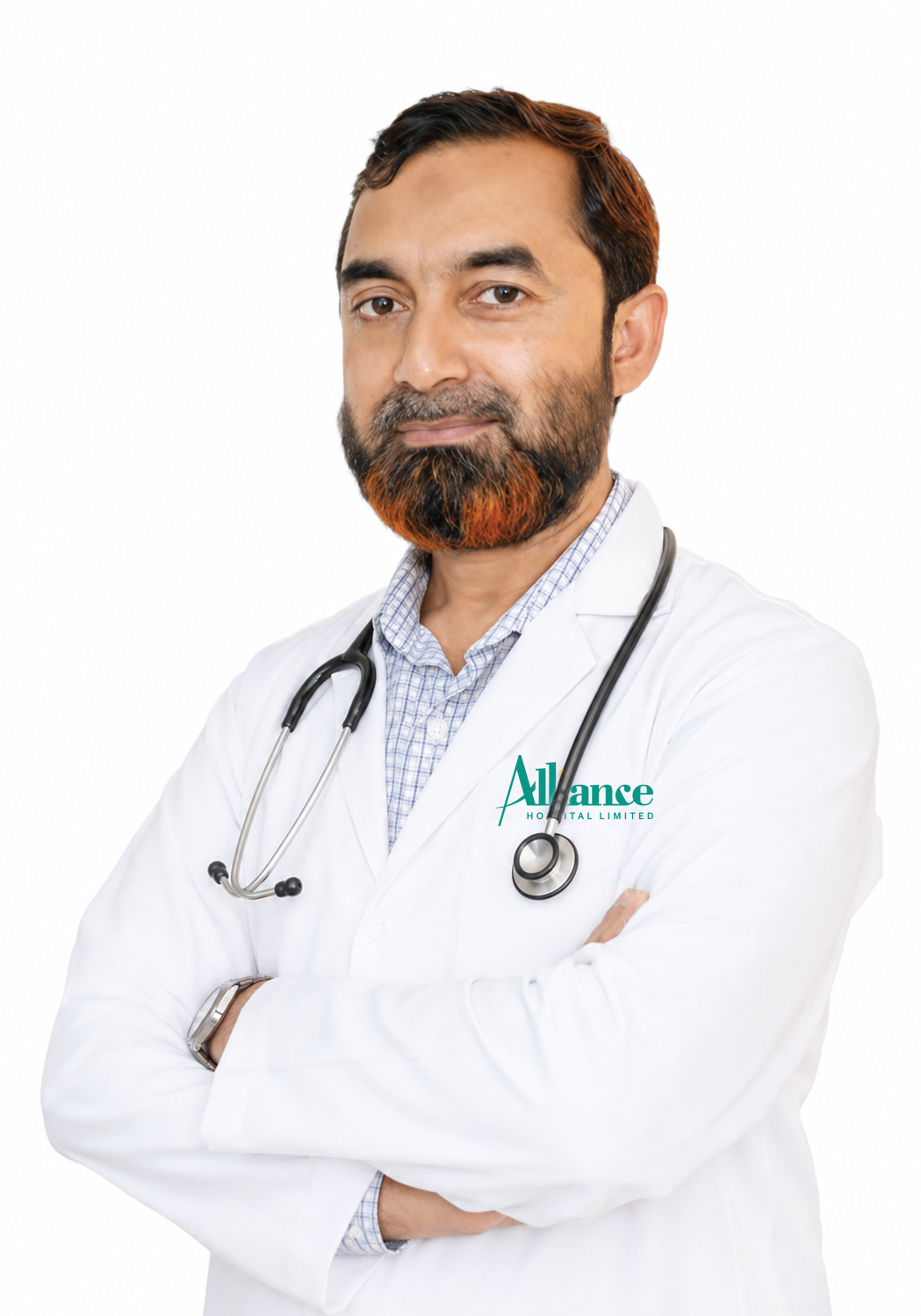
MBBS (DMC), FCPS (Surgery), MS (Colorectal Surgery) — Professor, Colorectal Surgery, Sir Salimullah Medical College
Specializes in the management of hemorrhoids, fissures, fistulas, and complex colorectal conditions using minimally invasive and laparoscopic techniques.
Diagnosis typically begins with a physical examination, and depending on the case, may include a proctoscopy or colonoscopy to assess the extent of the piles and rule out other conditions. Most consultations are straightforward and brief, and patients are often more anxious about the visit than the examination itself turns out to warrant.
Recovery varies by procedure — laser and stapled techniques generally allow patients to return to light activity within a few days, while conventional hemorrhoidectomy typically requires one to two weeks. A high-fiber diet, adequate hydration, and avoiding straining during bowel movements are usually recommended throughout recovery to support healing and reduce recurrence risk.
Dealing with piles symptoms or looking for a specialist consultation? Alliance Hospital’s Colorectal Surgery team in Shyamoli is available for evaluation and treatment.
No. Early-stage piles often respond well to dietary changes and minimally invasive procedures like rubber band ligation. Surgery is generally reserved for more advanced or persistent cases, as outlined by Mayo Clinic’s hemorrhoid treatment guidance.
Yes, laser hemorrhoid treatment is a well-established minimally invasive option that generally offers less pain and faster recovery compared to conventional surgery, though suitability depends on the piles’ grade and the patient’s specific case.
Recurrence is possible, particularly if underlying causes like chronic constipation or straining aren’t addressed. Maintaining a high-fiber diet and healthy bowel habits after treatment meaningfully reduces this risk, a point also emphasized by the NHS’s guidance on piles.
Not necessarily. While piles are the most common cause, persistent or new rectal bleeding should always be evaluated by a specialist to rule out other colorectal conditions.
Recovery ranges from a few days for minimally invasive procedures like laser treatment to one to two weeks for conventional hemorrhoidectomy, depending on the technique used and the severity of the case — consistent with recovery timelines described by the Cleveland Clinic.